
days
hours
minutes
seconds
COMIC CON BRUSSELS IS YOUR CELEBRATION OF GEEK CULTURE IN THE HEART OF EUROPE!
Nous sommes un Comic Con presenté à Tour & Taxis à proximité de la Gare du Nord(Bruxelles). A Comic Con Bruxelles vous trouverez des Dealers, Artistes, Acteurs, … C’est une convention qui rassemble tout ce que vous aimez:
How Anonymous Gaming Trends Are Reshaping Canada’s Online Casino Industry, Casizoid Finds
Canada’s online gambling landscape has undergone a significant structural shift over the past several years, driven not by regulatory overhaul alone but by a quieter, more consumer-led transformation: the growing demand for anonymous gaming. As provinces like Ontario moved to establish regulated iGaming frameworks — Ontario’s open market launched in April 2022 under iGaming Ontario — a parallel ecosystem of players began actively seeking alternatives that minimized personal data exposure. This tension between regulatory transparency and user privacy has become one of the defining dynamics of the Canadian online casino market in 2023 and 2024, with research from platforms like Casizoid highlighting just how pronounced the shift has become.
The Privacy Imperative: Why Canadian Players Are Moving Toward Anonymous Gaming
The appetite for anonymous gaming in Canada is not simply a fringe preference — it reflects broader anxieties about data security, financial surveillance, and the growing footprint of Know Your Customer (KYC) requirements that licensed operators are legally obligated to enforce. Under Ontario’s regulatory model, operators must comply with anti-money laundering obligations set out under Canada’s Proceeds of Crime (Money Laundering) and Terrorist Financing Act, which requires identity verification for transactions above certain thresholds. For many players, this level of disclosure feels disproportionate to what is essentially recreational activity.
Cryptocurrency-based casinos have emerged as the primary vehicle for anonymous or pseudonymous play. Bitcoin, Ethereum, and privacy-focused coins like Monero allow players to deposit and withdraw without linking transactions to a verified identity in the traditional sense. These platforms typically operate without a provincial license, accepting Canadian players under licensing frameworks from jurisdictions such as Curaçao or Kahnawake. While this places them outside the consumer protections offered by iGaming Ontario, a meaningful segment of the Canadian player base has demonstrated a willingness to accept that trade-off in exchange for reduced data exposure.
Survey data gathered across Canadian gambling communities in 2023 suggests that concerns about data breaches at licensed operators are not unfounded. Several major international gaming groups operating in regulated markets have experienced data incidents in recent years, reinforcing the perception among privacy-conscious players that centralized identity databases represent a meaningful risk. The anonymous gaming trend, in this context, is less about evading accountability and more about a rational response to demonstrable data security vulnerabilities.
How the Industry Is Responding: Product Innovation and Structural Adaptation
The response from the broader casino industry has been uneven but increasingly deliberate. Some licensed Ontario operators have begun exploring tiered KYC models, where lower-stakes recreational players face lighter verification requirements while higher-volume accounts undergo full identity checks. This approach mirrors trends seen in the United Kingdom following the Gambling Commission’s 2023 review of affordability checks, where the regulator attempted to balance harm prevention with friction reduction for low-risk users.
Casizoid, which tracks emerging trends across the Canadian and international online casino sectors, has documented a measurable increase in player migration toward crypto-native platforms between 2022 and 2024. The pattern is particularly visible among players aged 25 to 40, a demographic that combines digital fluency with heightened awareness of privacy norms shaped by broader tech culture. Analysts working in this space have noted that the trend is not monolithic — players are not abandoning licensed platforms entirely, but rather diversifying their activity across both regulated and unregulated environments depending on the nature of the session and the stakes involved.
Game providers have also begun adapting. Several software studios now offer provably fair gaming mechanics, a blockchain-based verification system that allows players to independently confirm the fairness of each game outcome without relying on third-party audits or operator transparency. This innovation directly addresses one of the core trust deficits that drives players toward anonymous platforms in the first place. Readers interested in how these developments are catalogued across different platform types can find relevant comparisons here, where the technical distinctions between provably fair and RNG-certified games are mapped against licensing status.
Regulatory Tensions and the Challenge of Enforcement
The existence of a thriving anonymous gaming segment creates a genuine regulatory dilemma for Canadian authorities. iGaming Ontario has made significant progress in channeling players toward licensed operators — the regulator reported over 1.7 million active player accounts and $58.2 billion in total wagers during its first full fiscal year ending March 2023. These numbers represent a substantial formalization of what was previously an entirely grey-market activity. However, the same report acknowledged that offshore, unlicensed platforms continue to attract Canadian players, and the anonymous gaming trend has made quantifying that activity considerably more difficult.
Enforcement against unlicensed offshore operators has historically been limited. Canadian provinces lack the jurisdictional reach to pursue operators incorporated in Curaçao or Malta, and payment processing restrictions — the primary tool used in markets like the United States — have been applied inconsistently. Cryptocurrency transactions further complicate this picture, since they can bypass traditional banking rails entirely. The Alcohol and Gaming Commission of Ontario (AGCO) has issued public advisories warning players about unlicensed platforms, but advisories carry no legal compulsion and have shown limited effectiveness in deterring privacy-motivated users.
Some regulatory observers have proposed a more pragmatic approach: rather than attempting to suppress anonymous gaming entirely, regulators could explore privacy-preserving compliance mechanisms that allow for AML monitoring without requiring operators to maintain comprehensive player identity databases. Zero-knowledge proof technology, which allows a party to verify a claim — such as a player being over 19 years of age — without revealing underlying personal data, has been discussed in academic and policy circles as a potential bridge between regulatory requirements and player privacy expectations. Implementation at scale remains a distant prospect, but the conversation reflects a growing acknowledgment that current frameworks may not be sustainable as privacy technology matures.
Casizoid’s Findings and the Broader Implications for Market Structure
Casizoid’s ongoing analysis of Canadian player behavior points to a market that is effectively bifurcating. On one side sits the regulated Ontario market, which continues to grow in terms of registered accounts and gross gaming revenue, supported by major international operators with household brand recognition. On the other side is a less visible but economically significant segment of players who have opted out of the licensed ecosystem in favor of platforms that offer greater anonymity, faster withdrawals, and in many cases, more generous bonus structures unconstrained by responsible gambling mandates.
This bifurcation has implications beyond consumer choice. It affects tax revenue, since unlicensed operators contribute nothing to provincial coffers. It affects player protection, since anonymous platforms are not bound by self-exclusion registries, deposit limits, or mandatory problem gambling messaging. And it affects the competitive dynamics of the licensed market, since operators who absorb the cost of full regulatory compliance are effectively competing against platforms that do not.
The anonymous gaming trend also intersects with broader questions about the future of digital identity in financial services. As open banking frameworks develop in Canada — the federal government has been working toward an open banking regime since at least 2018, with implementation timelines repeatedly revised — the relationship between financial identity and recreational activity will become more integrated, not less. Players who currently use cryptocurrency to maintain separation between their gambling activity and their broader financial profile may find that separation increasingly difficult to maintain as digital financial infrastructure becomes more interconnected.
What Casizoid’s research ultimately reveals is that anonymous gaming is not a temporary anomaly or a niche preference confined to cryptocurrency enthusiasts. It is a structural feature of the current Canadian online casino market, shaped by real regulatory pressures, genuine data security concerns, and the availability of technically sophisticated alternatives to licensed play. How regulators, operators, and consumers navigate this tension over the next several years will determine whether Canada’s iGaming market consolidates around its licensed framework or continues to operate as a divided ecosystem — one visible and regulated, the other deliberately obscured.
COMICS, COSPLAY, GAMING, FILMS, MANGA, COLLECTIBLES, ANIME, SERIES TV, VETEMENTS, JOUETS, GADGETS ET BEAUCOUP PLUS ENCORE!

hidden blocks
Les invités seront bientôt annoncés
Invités
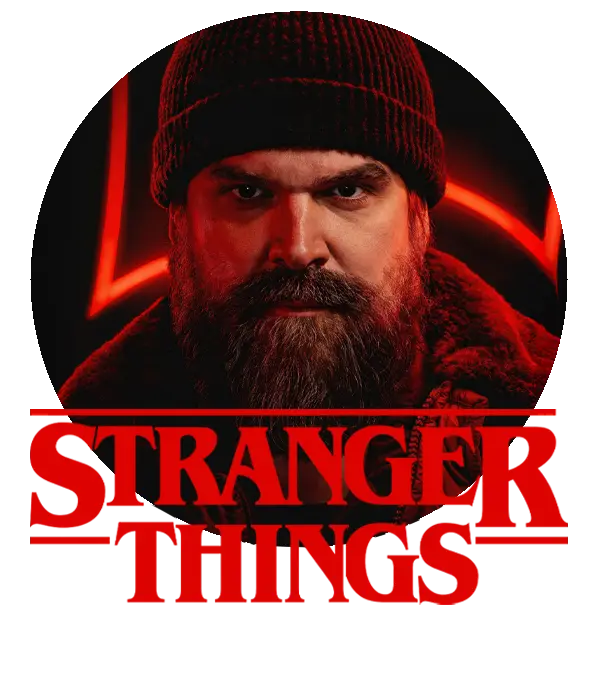
David Harbour
Stranger Things - Hellboy - Black Widow / Thunderbolts - ...

Miranda Otto
The Lord Of The Rings - Chilling Adventures of Sabrina - ...
Matt Smith
House of the Dragon - Doctor WHO - Morbius - The Crown - ...